How to Draw Radius Lines on an Arc Without Its Center
An arch, a fan or a curved rail needs lines that all point at the middle. When the middle is off the wall or out in the yard, you can still strike every one of them with a compass and a straightedge alone.

Materials
- A compass that holds its setting
- A straightedge or ruler
- A sharp pencil
Steps
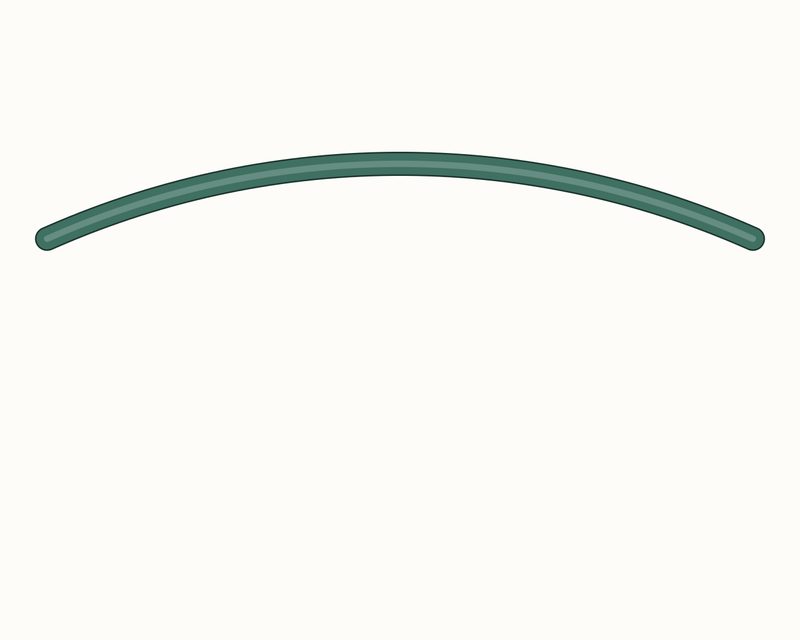
Start with the curve you have
You need a drawn curve and no way to reach its center. This is the normal case on a wall, a floor or a wide panel. The method never asks you to find the middle.
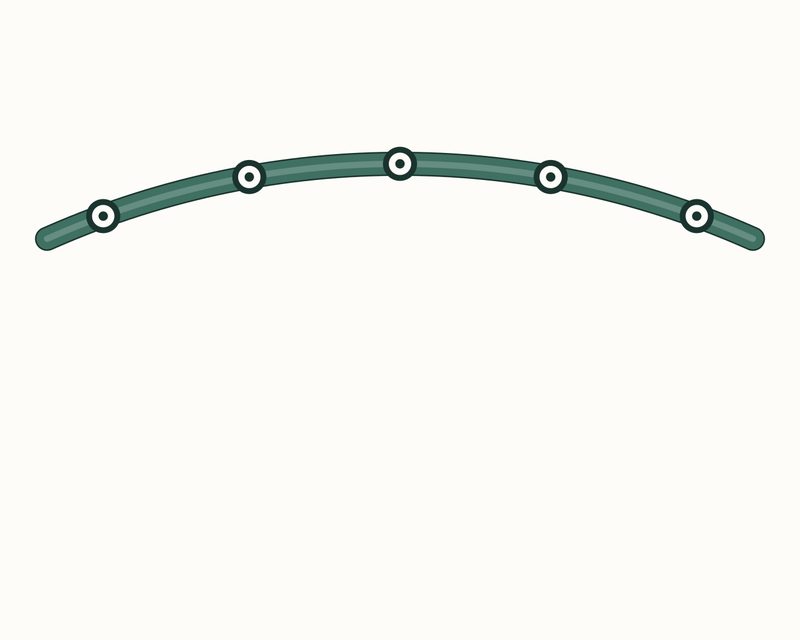
Mark equal divisions along the curve
Set your compass to the spacing you want between the finished lines. Walk it along the curve, marking as you go. Number the marks in order. The divisions must be equal, and this is the one part of the job where care really pays.
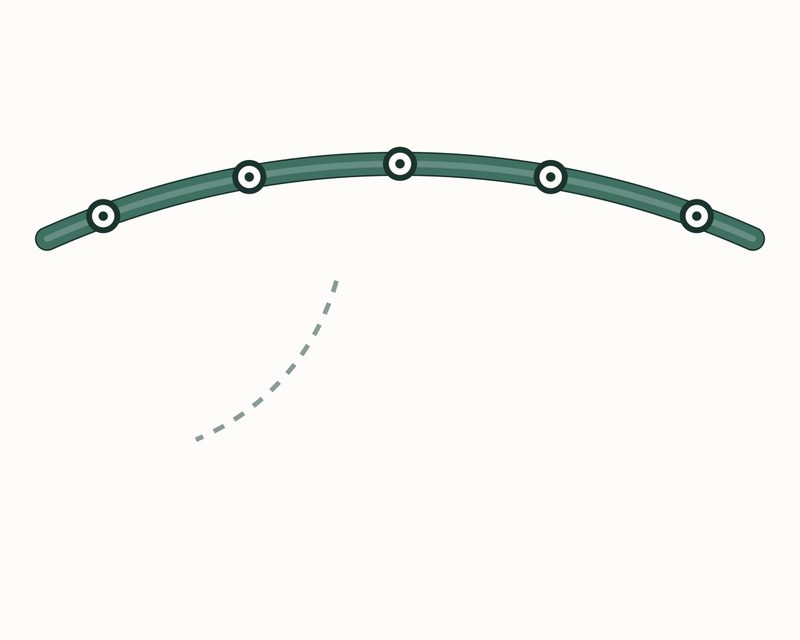
Open the compass wider than one division
Open it to about one and a half divisions. Anything wider than a single division will work. Leave it at this setting for the whole job, because changing it partway puts the later lines out.
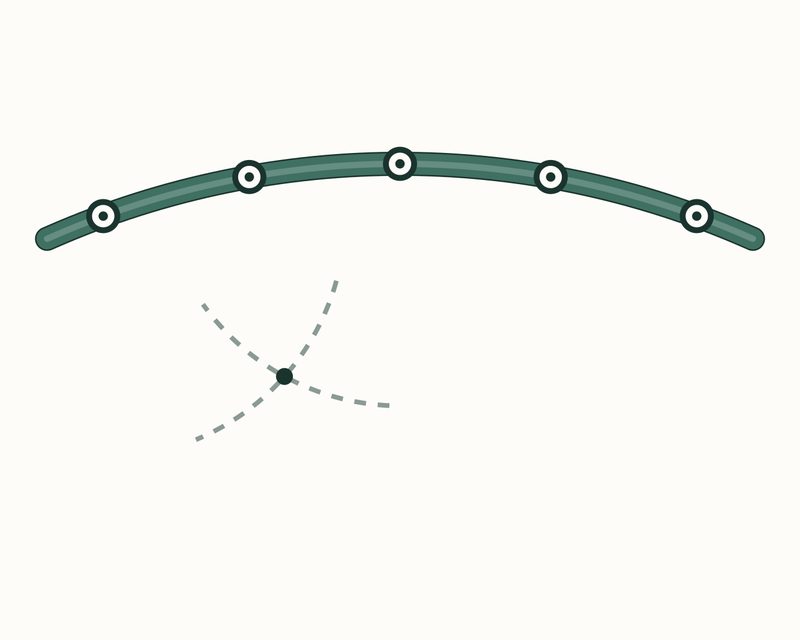
Swing an arc from the mark on each side
Take the second mark. Ignore it for a moment and work from its two neighbors instead. Swing a short arc from the first mark and another from the third mark. They cross at one point below the curve.
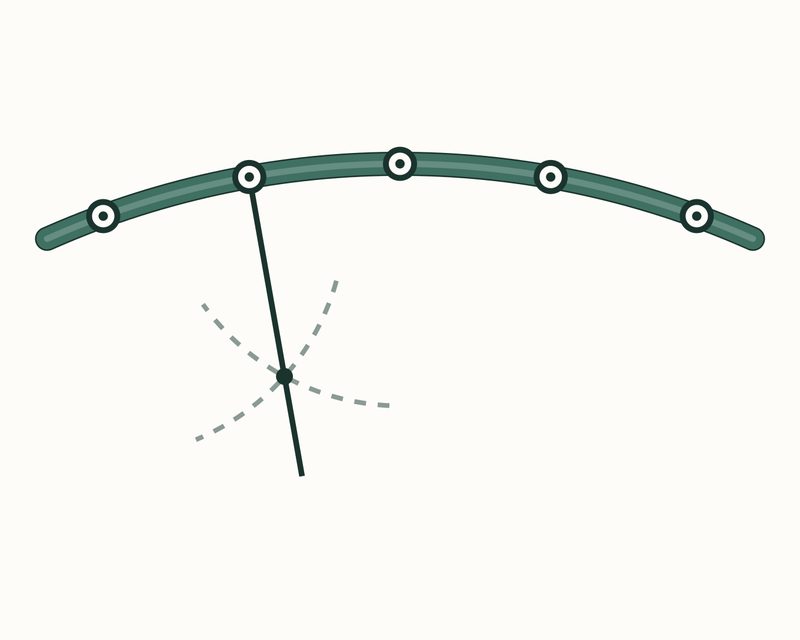
Rule from the mark through the crossing
Lay the straightedge on the second mark and on the crossing you just made. Draw the line. It is a true radius, and carried far enough it would reach the center you cannot get to.
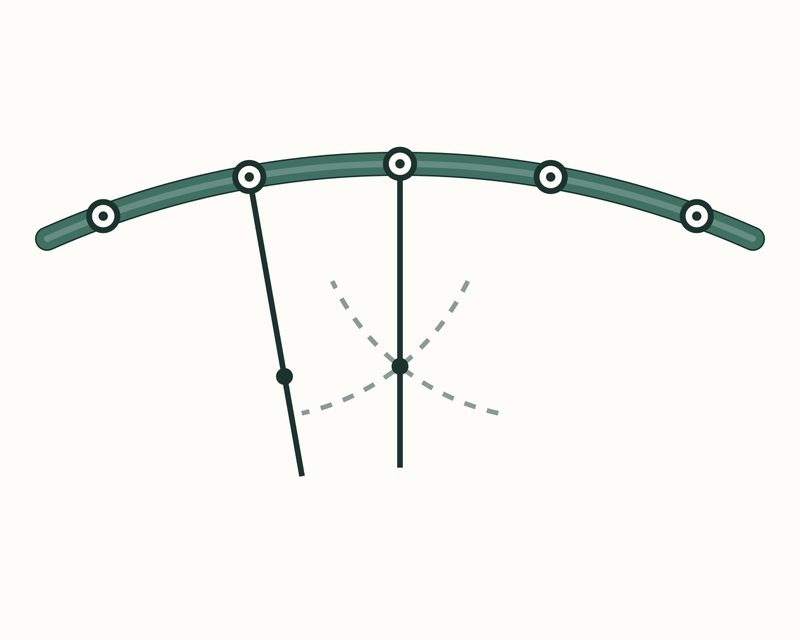
Move along one mark and repeat
Now take the third mark and work from the second and fourth. Swing the same two arcs and rule the same line. Every mark is handled by its own two neighbors.
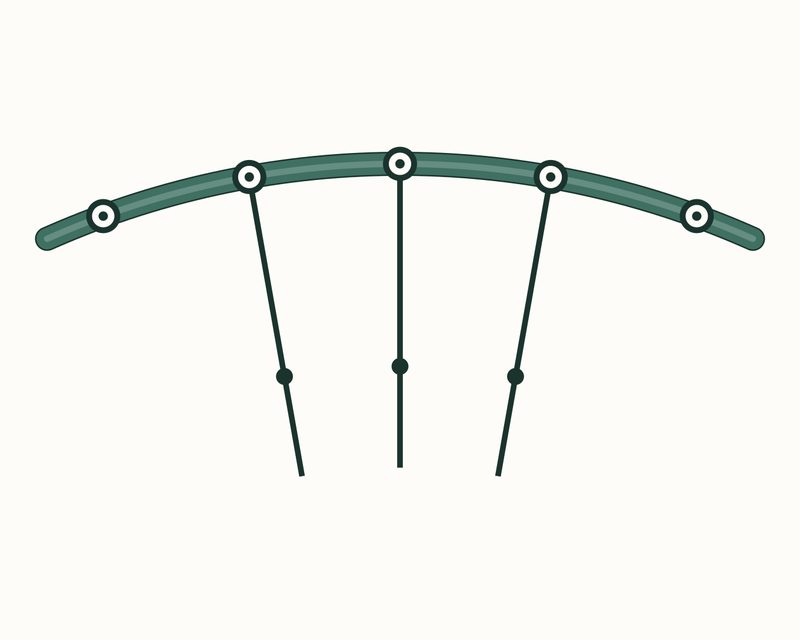
Carry on to the end of the curve
Repeat for each mark that has a neighbor on both sides. To get a line on the very first and last marks, step one extra division past each end and use those. All the lines aim at the same point.
Tips
- Why it works: the crossing you make is the same distance from both neighboring marks. That puts it on the perpendicular bisector of the line joining them. The bisector runs through the center of the curve, and through the middle mark too. All three sit on one straight line.
- Equal divisions are what make it true. If one division is wider than the rest, the middle mark is no longer halfway between its neighbors, and the line you rule will miss.
- Keep the compass at one setting for every crossing. A setting that drifts gives you crossings that no longer line up with their marks.
- Check your work before you commit. Any two of the finished lines should meet at the same point, so extend two of them on scrap and see whether the third agrees.
Sources
Each step in this guide is drawn from facts stated by several of these pages independently. Sources that did not corroborate anything used here are not listed.
Leave a comment
Comments are reviewed before appearing. See our Privacy Policy for how your name and message are handled.
Comments
No comments yet.