How to Find the Center of a Circle with a Compass
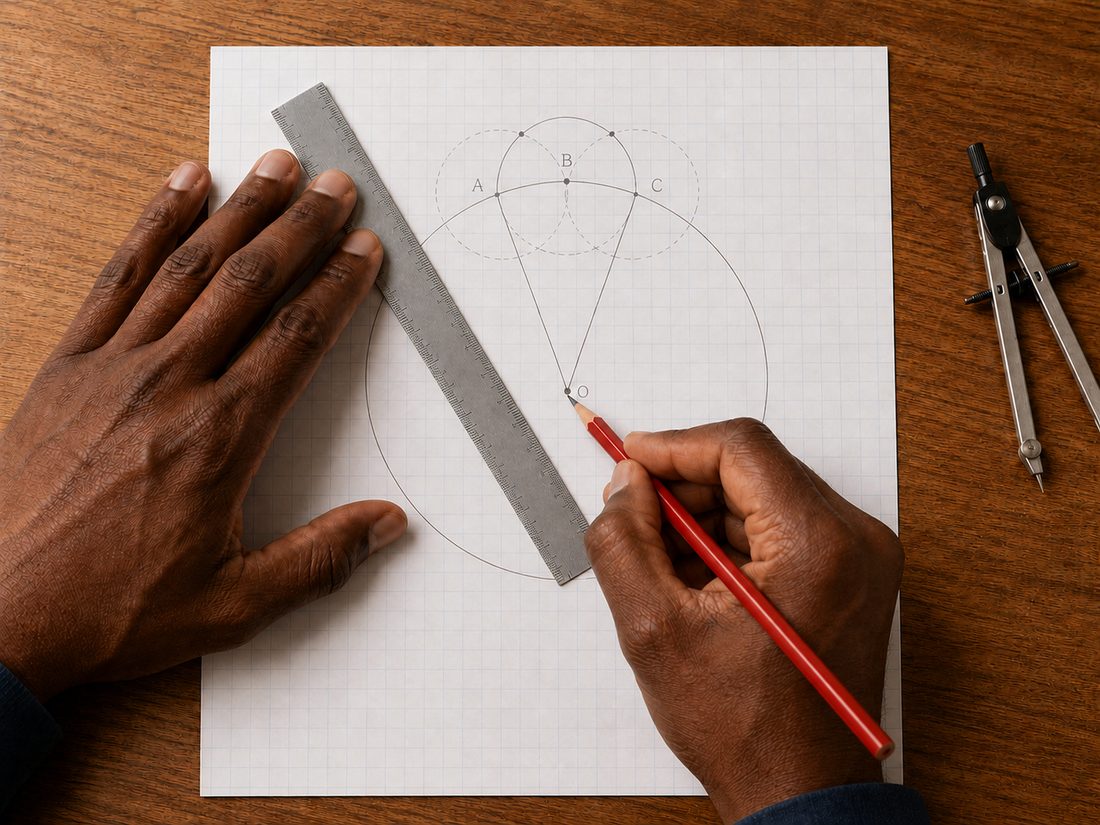
A drawn curve carries no mark where its center is, and often you cannot measure to it. This is the way the old drawing offices found it, with a compass, a straightedge and seven moves.
Materials
- A compass that holds its setting
- A straightedge or ruler
- A sharp pencil
Steps
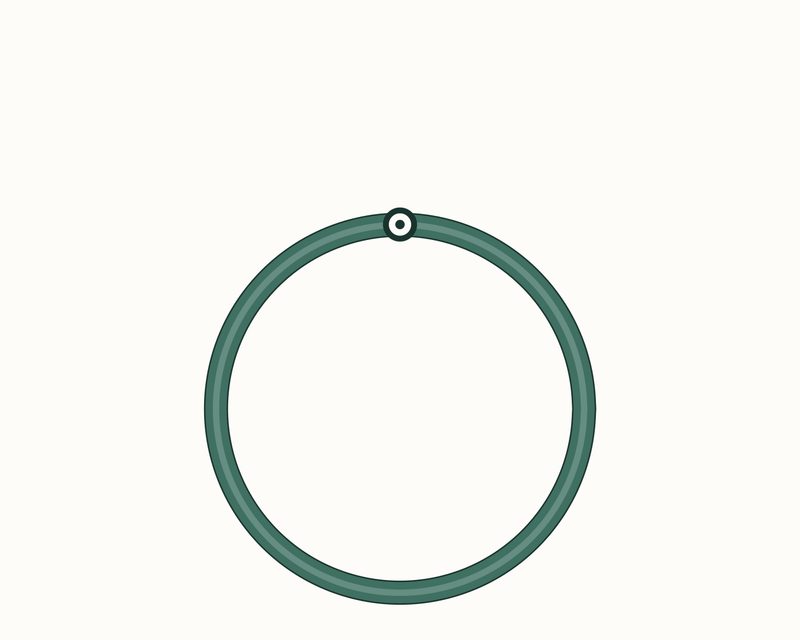
Mark any point on the curve
Anywhere on the curve will do. This first mark is only a starting place, so do not measure for it. Call it your home mark.
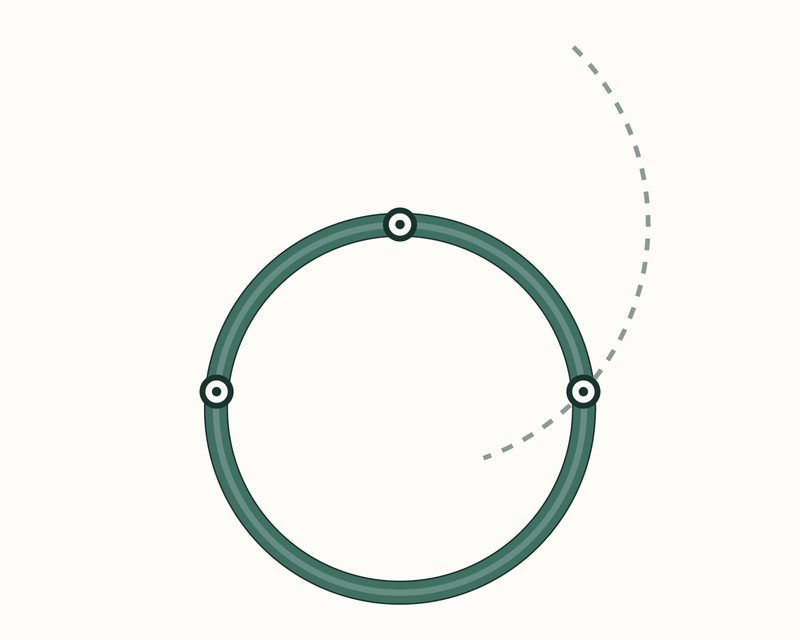
Swing a wide arc from that mark
Open the compass fairly wide. Swing an arc from your home mark, generously, well past the curve on both sides. It crosses the curve in two places. Mark both of them. Draw this arc longer than looks necessary. The later marks land on it, and a short arc will not be there to catch them.
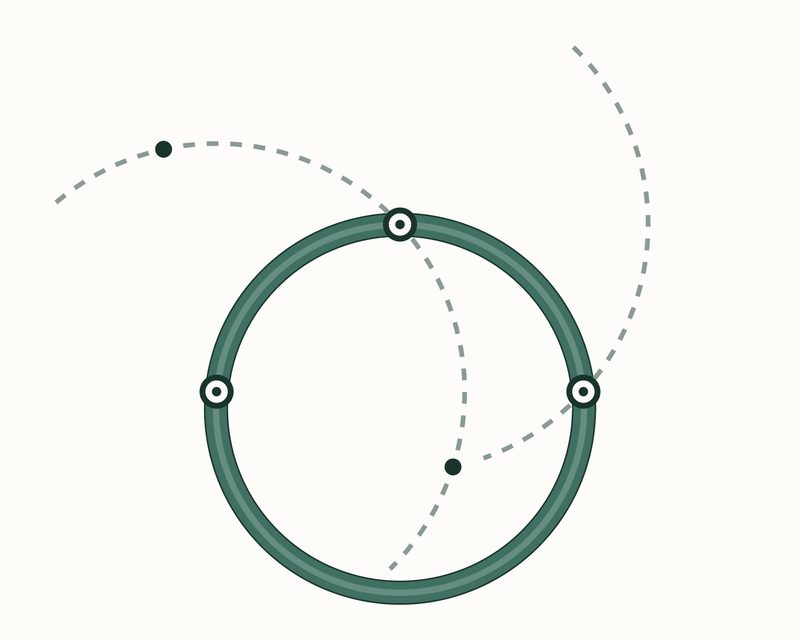
Swing an arc from the left crossing
Do not change the compass opening. This matters more than anything else here. Swing an arc from the left crossing. It cuts your first arc in two places. Mark both.
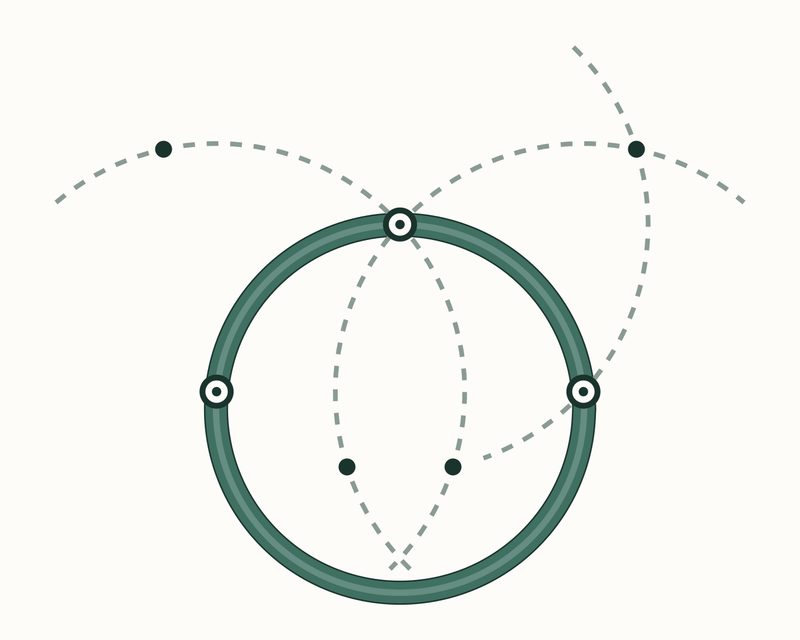
Swing an arc from the right crossing
Still without changing the opening, swing an arc from the right crossing. It cuts your first arc in two more places. Mark those as well. You now have four small cuts on the first arc.
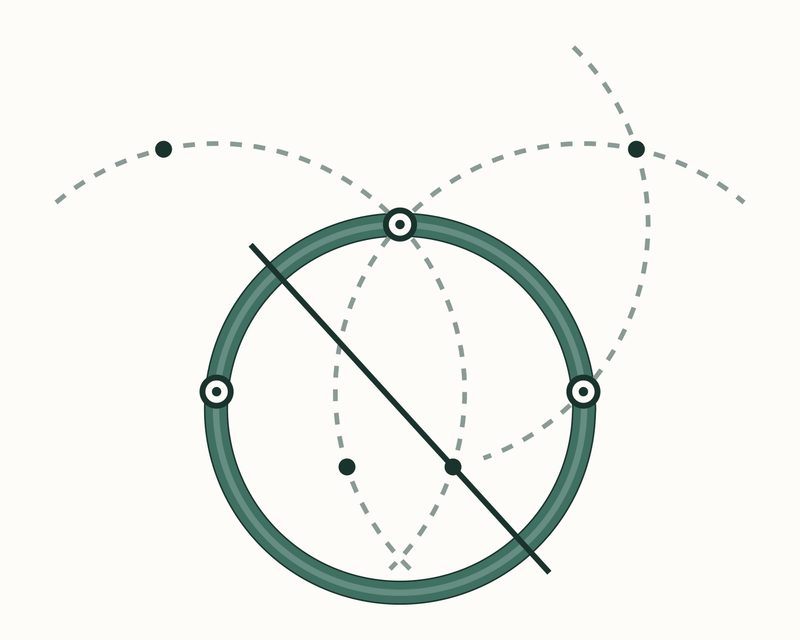
Rule a line through the first pair of cuts
Take the two cuts made by the left arc. Lay a straightedge on them and draw a line running into the middle of the curve. Make it long enough to cross the middle.
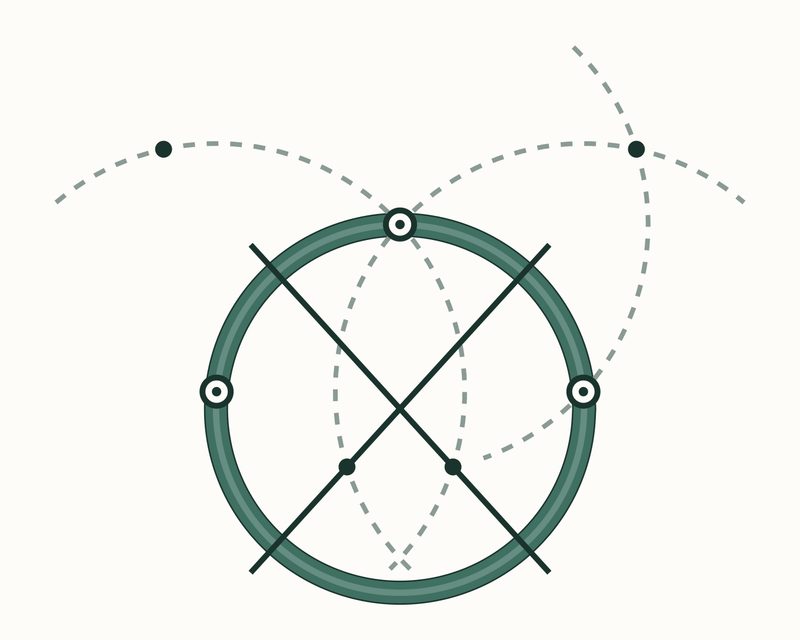
Rule a line through the second pair
Do the same with the two cuts made by the right arc. Draw a second line into the middle of the curve.
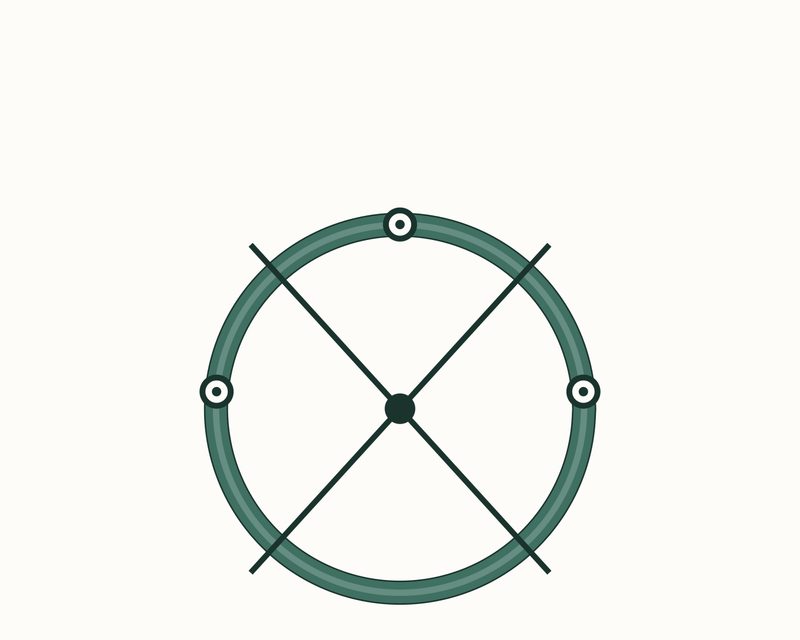
The lines cross at the center
The two lines meet at one point, and that point is the center. Put the compass on it to check. Set to any mark on the curve, it should run all the way round and come back.
- Where this comes from: this is the construction given in The Draughtsman Handbook of Plan and Map Drawing by G. G. Andre, published in 1891, as figure 12. Why it works: each pair of cuts sits the same distance from two points on the curve. The line through them cuts a chord in half at a right angle. Every line like that passes through the center, and two of them are enough to fix it.
Tips
- Why it works: each ruled line joins two cuts that sit the same distance from both ends of a chord. That makes the line the perpendicular bisector of that chord. Every perpendicular bisector of a chord runs through the center, so two of them meet there.
- Keep the compass at one opening from the first arc to the last. If it drifts, the cuts are no longer equal distances from the ends of the chord. The line you rule then misses the center.
- Open that first arc wide. Two crossings far apart on the curve give a long chord and a line whose direction is certain. Crossings close together let a small slip in a cut swing the ruled line a long way.
- You do not need the whole circle. Any piece of curve that takes the home mark and both crossings will do. That is why this still works on a broken rim or a curve running off the edge of the sheet.
Sources
Each step in this guide is drawn from facts stated by several of these pages independently. Sources that did not corroborate anything used here are not listed.
Leave a comment
Comments are reviewed before appearing. See our Privacy Policy for how your name and message are handled.
Comments
No comments yet.