How to Find Your Average First Frost Date
Your average first frost date is the anchor for most fall garden planning. This guide shows you how to look it up, and how much to trust it.
A tool for this
- First Frost Planner — Turn your average first frost date into the dates you plan from. When to start, how early or late frost could really arrive, and how long you have left.
Steps
Know what counts as frost
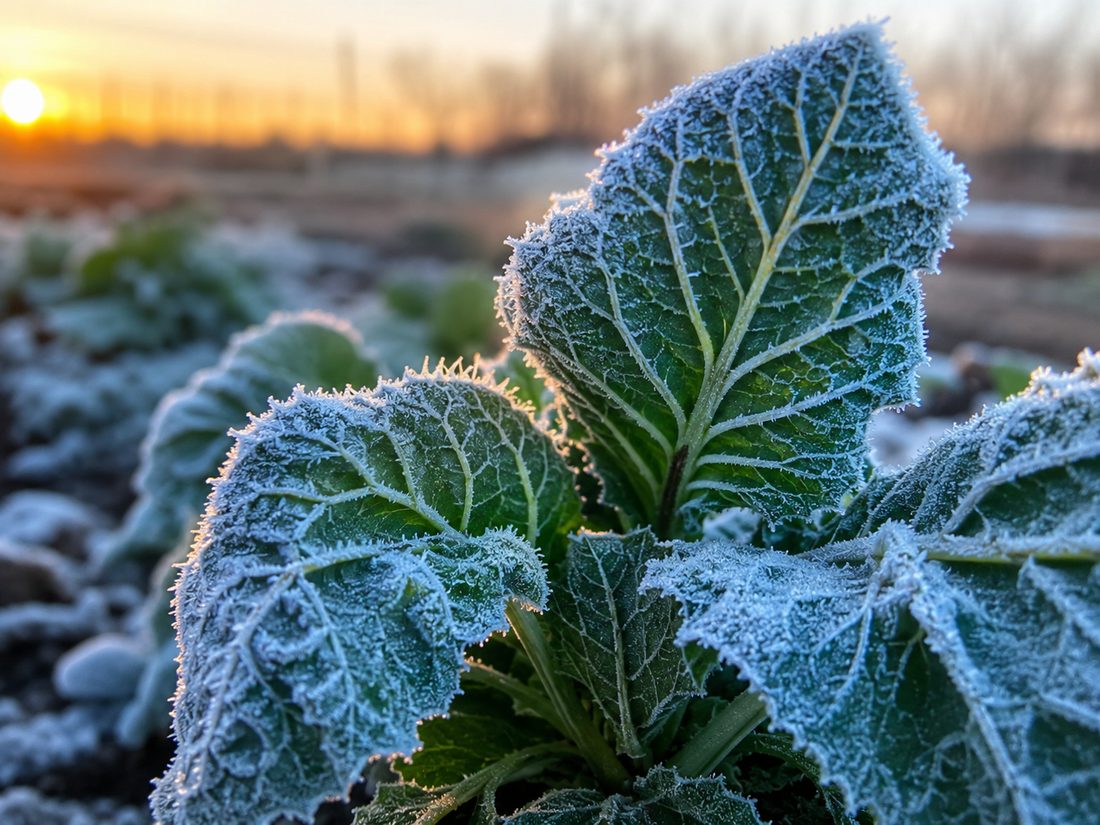
A frost or freeze date is the day the air temperature drops to 32°F, which is 0°C, or below. That 32°F mark is the standard threshold behind every frost date you will look up.
Learn the three levels of cold
Not all cold below that line does the same damage. A light freeze runs from 29 to 32°F, which is about -2 to 0°C. It harms tender plants. A moderate freeze runs from 25 to 28°F, or about -4 to -2°C. It destroys most plants. A severe freeze is 24°F, about -4°C, or below. It kills nearly every garden plant.
- The 32°F line is where frost dates are drawn, but it is not where your garden stops caring. Tender plants such as basil and tomatoes suffer at the light freeze stage, while hardier crops shrug that off and only give up in a moderate or killing freeze. So your first frost date is really the first date your most fragile plants are at risk, not the day the whole garden ends.
Look up your date by ZIP code
With those thresholds in mind, the fastest way to get your own date is a frost date lookup tool. Type in your ZIP code, or your city or postal code, and the tool returns the estimated date from the nearest official weather station.
Try the garden.org tool
One good option is the National Gardening Association's frost date tool at garden.org, which is built on NOAA data. Enter your zip code, find the "In the Fall" chart, and read across the 32° row to the 50% column. That figure is your average first frost date.
- Why the 50% column? It means half the years on record saw frost by that date, and half did not. It is the middle of the range, so it is the number most people mean by "average first frost". Reading a different column gives you a different question's answer, such as the date frost has already arrived by in 90% of years.
Try MyFrost.date for more detail
MyFrost.date works from decades of daily minimum temperature records in NOAA's Global Historical Climatology Network, or GHCN, to calculate the 50% frost probability date. It also gives you 30% probability dates and hard frost dates at 28°F, which is -2°C.
Check which probability your date is
The date most tools give you is a 50% probability date. For a first frost that means frost arrives before it in about half of years. It is a midpoint, not a deadline. If your source also offers a 10% or 30% date, that one falls earlier. Use the earlier date as your anchor for anything tender or hard to replace.
- Hardiness zones and frost dates measure two different things. A USDA zone is based on average annual minimum winter temperature, so it describes how cold your winter gets, not when your cold season starts. A zone chart can only give you a broad date for a broad band of the country. Use it when nothing better is available.
Use your hardiness zone instead
If a lookup tool is not an option, find your USDA Plant Hardiness Zone by ZIP code. You can then read the average first frost date off a zone chart. Zone-based dates are rougher than dates taken from a weather station.
Allow two weeks either way
Whichever number you end up with, treat it as a centre point rather than a deadline. In any given year, frost can arrive one to three weeks early or one to three weeks late. Build in a safety margin of about two weeks.
Watch the forecast near the date
That margin is not a substitute for watching the sky. Frost dates are historical averages and estimates, not forecasts, so keep an eye on your local weather forecast as the date gets closer.
Tips
- Write the date down somewhere you will find it again, along with the two weeks before it. Most fall garden jobs are timed from that window rather than from the date itself.
- If you can, take your date from a weather station rather than a zone chart. Station records come from decades of real daily temperature readings near you, and that is a much finer measurement than a zone band.
- Look up the hard frost date at 28°F as well as the 32°F one. The two dates answer different questions. One tells you when your tender plants are first at risk, the other tells you when the growing season is genuinely over.
- If two sources give dates more than two weeks apart, they are probably quoting different probability thresholds rather than disagreeing. Check which one you are reading before you average them.
Sources
Each step in this guide is drawn from facts stated by several of these pages independently. Sources that did not corroborate anything used here are not listed.
- How to Find Your First and Last Frost Dates by ZIP Code | Agri agrifarming.in
- Find the First and Last Frost Dates in Your Area by ZIP Code morningchores.com
- Frost Date Calculator - Find Your Average First & Last Frost Dates by ... gardentruth.com
- Frost Date Calculator — First & Last Frost Dates (2026) homesteadcalc.com
- Garden Frost Date Calculator — Planting Schedule by Zip Code gardenfrostdates.com
- When to Expect the First Fall Freeze | News ncei.noaa.gov
Leave a comment
Comments are reviewed before appearing. See our Privacy Policy for how your name and message are handled.
Comments
No comments yet.