How to Get Cat Hair Off Clothes
Cat hair sticks to clothes and does not want to let go. This guide covers the quick fixes for one garment, the laundry tricks for a whole load, and the habits that stop the hair getting there in the first place.
Steps
Know why the hair sticks
Cat hair holds onto clothes mainly through static electricity. The hairs are also very fine, and tiny overlapping scales on the surface of each hair hook into the fibres of your fabric.
- Why washing first backfires: water does not rinse cat hair away. It makes the hair cling harder to the fabric, and the hair that does come loose settles in the drum and lands on whatever you wash next. Worse, it can work its way into the drain and pump. A few minutes with a roller or a glove saves a repair bill.
Get the hair off before washing
Because of that grip, take off as much hair as you can before the garment goes anywhere near water. Wet cat hair clings harder, stays behind in the machine and moves onto the next load. It can also clog the washer's drain and pump.
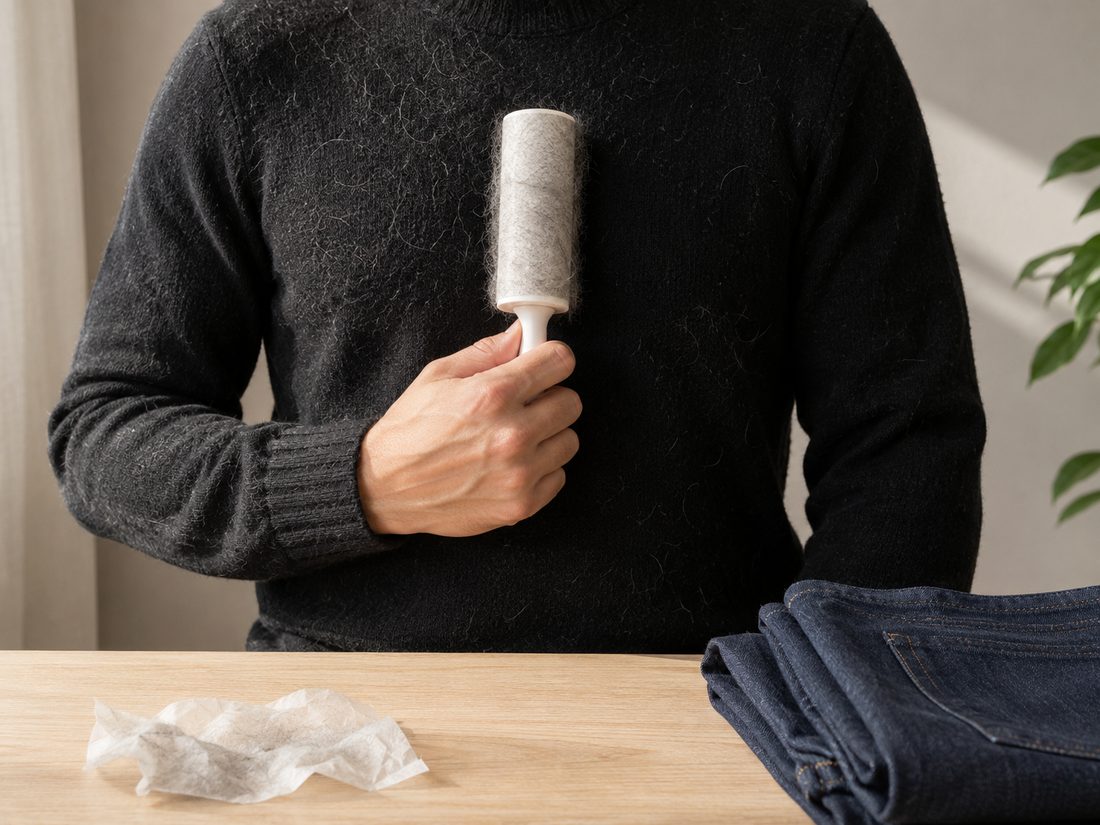
Roll the garment with a lint roller
The quickest way to lift that hair off is a lint roller. Run it over the garment, and when it stops picking hair up, peel off the used sticky sheet to expose a fresh layer.
Wipe it with a damp rubber glove
No roller in the house? Put on a rubber dishwashing glove and dampen it lightly with water. Run your hand over the fabric in one direction, and the hair balls up and lifts off. Rinse the glove and repeat. Pick this over a roller when you want a free, reusable tool that makes no waste.
Press tape onto the hairy patches
Tape is another stand-in when you have no lint roller. Wrap wide packing, masking or duct tape around your hand with the sticky side out. Pat or press it onto the hairy areas, and swap the strip when it loses its stickiness.
Rub the clothes with a balloon
With no tools at all, use the static from step 1 to your advantage. Rub an inflated balloon over the clothing. Its static electricity pulls the hair off the fabric and onto the balloon.
Brush the fabric in one direction
A clothes brush works on hair too. Brush the garment from one side to the other, and the stiff bristles trap lint and stray hair. Test on a small area first to make sure the brush does not pluck the fabric.
- Test on a hem first: a clothes brush is stiff by design, and that is what makes it grip hair. On a loose knit or a delicate weave, the same stiffness can pull threads out of the fabric. Try an inside seam or a hem before you brush the front of a sweater.
Mist on an anti-static spray
Since static is doing most of the sticking, neutralise it. Mist clothes lightly with an anti-static spray such as Static Guard. The charge goes, clinging hair is released, and fresh fur stops settling on the garment.
Add fabric softener to the wash
Fabric softener helps in the machine as well. Use liquid fabric softener in the wash to loosen hair and cut static cling, so the hair is less likely to stick. wikiHow and petrealm both name it as the standard option, with white vinegar as the natural substitute.
Pour in white vinegar instead
For that natural substitute, add about half a cup of white vinegar to the rinse cycle or the fabric softener compartment. It relaxes and softens the fabric fibres so they let go of trapped hair. It works as a natural fabric softener too.
Use dryer sheets in the dryer
The dryer is your next chance. Use dryer sheets, or ones made for pet hair, to cut static cling. Loosened hair then tumbles off the clothes and into the lint trap.
Air-fluff a whole load first
For a whole load rather than one garment, use the dryer before you wash. Tumble the dry, hairy clothes on a no-heat air-fluff setting for about 10 minutes with a dryer sheet, so the hair collects in the lint trap. Then wash as usual and empty the lint trap.
Steam delicates and wool
Delicates and wool cannot go in the dryer, so steam them instead. Hang the garment and run a clothes steamer over it in downward strokes, or hang it in a steamy bathroom. The warmth and moisture relax the fibres and release trapped hair, ready for brushing.
Pick tools that tested well
Some products earn their place. In Good Housekeeping Institute Home Care & Cleaning Lab tests, the OXO Furlifter Pet Garment Brush left surfaces clean after one quick swipe, and its base holds several passes of hair before it needs emptying. A sweater loaded with heavy faux pet hair came out of the dryer almost completely fur-free when dried with a Bounce Pet Hair dryer sheet.
Clean out the machines
Hair also builds up in the machines themselves. Wipe the washer drum and door seal with a damp cloth, run an empty rinse or cleaning cycle, and clean the lint or drain filter regularly. Skip this and trapped hair goes straight back onto the next load.
Brush the cat regularly
The rest of the job is stopping hair reaching your clothes. Brush your cat regularly with a grooming or de-shedding tool, so loose hair is caught before it ever lands on a garment.
Match brushing to the coat
How often depends on the cat. Brush short-haired cats about once a week. Brush long-haired or heavy-shedding cats as often as daily, especially in the spring and fall shedding seasons.
- Spring and fall are the heavy weeks: shedding is not steady all year. In those two seasons even a short-haired cat drops far more hair than usual, and the clothes in your wardrobe show it. Brushing more often during those weeks does more for your clothes than any roller.
Vacuum the furniture
Much of the fur on your clothes comes off the furniture you sit on, not straight from the cat. Vacuum furniture and upholstery regularly with a handheld or pet-hair vacuum.
Wash the cat's bedding weekly
Fur in the cat's bed transfers straight onto your clothes. Wash the bed and blankets weekly, and take off as much hair as you can first.
Choose smoother fabrics
What you wear matters as well. Smooth, tightly woven fabrics such as denim, leather, silk, satin and microfiber attract far less cat hair. Wool, fleece, velvet, corduroy and polyester are fur magnets. Choose the smoother ones and there is less fur to remove.
Tips
- Keep a lint roller where you get dressed and a rubber glove by the sink. The glove costs nothing, works over and over, and makes no waste, so it is the better choice for anything more than a quick touch-up.
- Fabric softener and white vinegar do the same job in the wash. Softener is the standard option, and half a cup of vinegar is the natural substitute if you would rather not use it.
- Think about fabric before you buy. Denim, leather, silk, satin and microfiber shrug cat hair off, while wool, fleece, velvet, corduroy and polyester hold onto it.
Sources
Each step in this guide is drawn from facts stated by several of these pages independently. Sources that did not corroborate anything used here are not listed.
- How to Get Cat Hair Out of Clothes - Tips Bulletin tipsbulletin.com
- How to Get Cat Hair Out of Clothes: 8 Easy, Fast Fixes theidealcat.com
- How to Get Cat Hair Off Your Clothes | Pet Realm petrealm.co
- How To Get Cat Hair Out Of Clothes: Easy & Effective Methods fabricfits.com
- How To Get Dog & Cat Hair Off Clothes Without A Lint Roller bestvacuumpethairguide.com
- How to Get Cat Hair Out of Clothes: Ultimate Guide - Cats catcomfortshop.com
Leave a comment
Comments are reviewed before appearing. See our Privacy Policy for how your name and message are handled.
Comments
No comments yet.