How to Measure Ground Ingredients by Volume
Ground ingredients like flour and cocoa powder can be measured by weight or by volume, and the two do not always agree. This guide shows how to get an accurate amount from a measuring cup, and when to reach for a scale instead.
Steps
Reach for a scale first
A digital kitchen scale is the more accurate way to measure ground ingredients, so use it whenever you have one and the recipe lists grams or ounces. Measure by volume only when no scale is available, or when the amount is a teaspoon or tablespoon and too small for the scale to read.
Pick the right measuring cup
When you do measure by volume, use flat-rimmed dry measuring cups for ground and dry ingredients, and spouted liquid measuring cups for liquids. The two are not interchangeable. You cannot level a dry ingredient in a liquid cup, and a liquid will spill from a dry cup filled to the brim.
- Two cups that look interchangeable: dry cups and liquid cups hold the same volume, but they are built for opposite jobs. A dry cup is filled right to the flat rim so the excess can be swept off. A liquid cup has a spout and extra space above the top line, which is why liquid stays in it and why a ground ingredient has nothing to level against.
Spoon it in and level the top
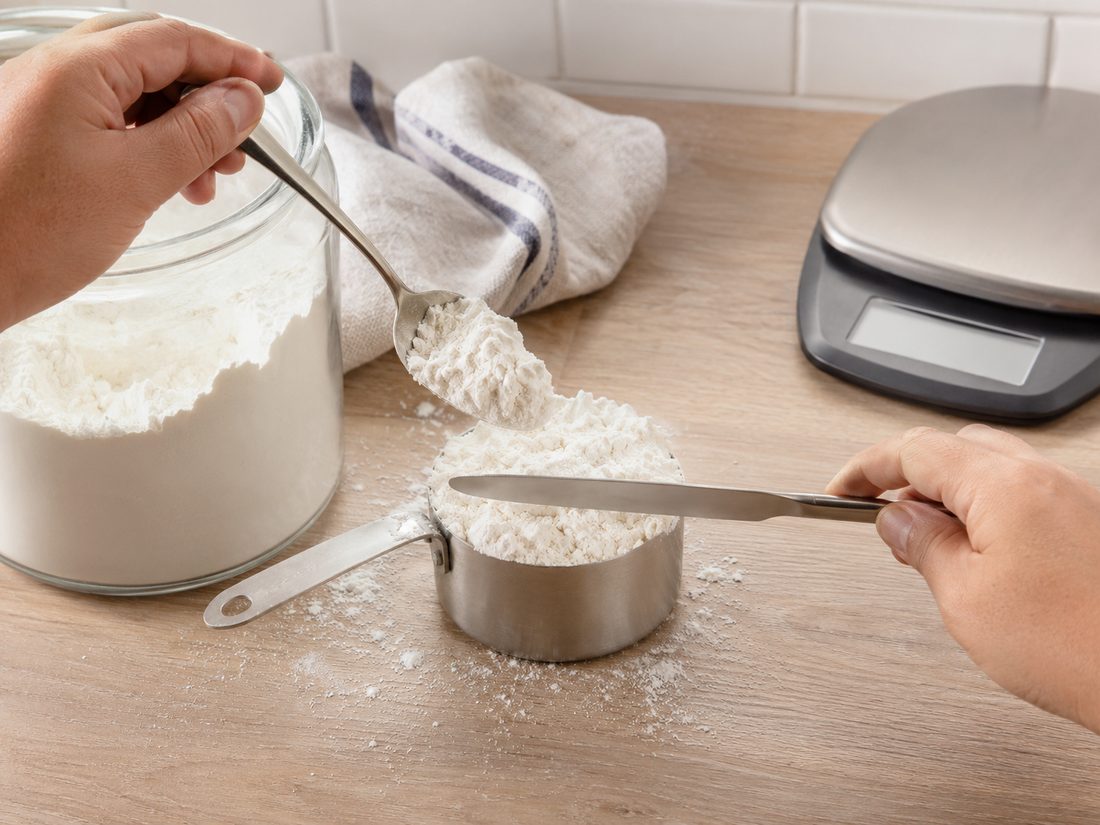
With a dry measuring cup in hand, use the spoon and level method. Fluff the ingredient first, then spoon it lightly into the cup without packing it down or tapping it. Level the top with a straight edge, such as the back of a knife.
Never scoop from the container
Do not dip the measuring cup straight into the flour container. Scooping presses the flour together, so the same cup holds substantially more than it should. The extra flour makes baked goods dry or tough.
- Where the extra flour comes from: a cup is not a fixed amount of flour, only a fixed amount of space. Fluffed and spooned in, that space holds far less flour than it does when the cup has been pushed into the bag and packed. This is the main reason a scale gives a more reliable result than a cup.
Tips
- Keep both kinds of cup in the drawer. A set of flat-rimmed dry cups and one spouted liquid cup covers almost everything a recipe will ask for.
- Cocoa powder behaves like flour. Spoon and level it the same way, and never scoop it straight from the tub.
- Small amounts are the exception to the scale rule. A teaspoon or tablespoon is usually below what a kitchen scale can read, so measure those by volume even when the scale is out on the counter.
Sources
Each step in this guide is drawn from facts stated by several of these pages independently. Sources that did not corroborate anything used here are not listed.
- How to Properly Measure Baking Ingredients (Video) sallysbakingaddiction.com
- How To Measure Baking Ingredients (Easy Guide) - The Yummy Bowl theyummybowl.com
- How to Measure Ingredients for Baking - Little Sunny Kitchen littlesunnykitchen.com
- How To Measure Ingredients Correctly - Preppy Kitchen preppykitchen.com
- How To Measure Recipe Ingredients (With Printable Chart) - foodywise.com
- Weight vs Volume Measurements in Baking and the Best ... loveandoliveoil.com
Leave a comment
Comments are reviewed before appearing. See our Privacy Policy for how your name and message are handled.
Comments
No comments yet.