How to Roll Coins for the Bank
Loose change is only worth something once a bank will take it, and most banks want it rolled. This guide takes you from a jar of mixed coins to neat rolls you can hand over the counter.
Steps
Sort your change by denomination
Tip the jar out and build a separate pile for each coin. A roll may hold only one denomination, so pennies, nickels, dimes and quarters never mix.
Get your coin wrappers
With the piles in front of you, you can see how many wrappers you need. Banks and credit unions usually give empty wrappers out free, so ask a teller rather than paying. Dollar stores, office supply stores, supermarkets and online sellers also sell them cheaply.
- Free beats cheap: wrappers cost so little in shops that it is easy to just buy them. A teller will normally hand you a stack for nothing. Buying is worth it only when you would rather not make the trip.
Count the right number into each roll
Every wrapper takes a set count. A penny roll holds 50 coins and comes to 50 cents. A nickel roll holds 40 and comes to $2. A dime roll holds 50 and comes to $5. A quarter roll holds 40 and comes to $10.
- The count is the value: a roll is worth what the count says it is. Forty quarters is $10. Thirty-nine quarters in the same wrapper is not, and nobody will spot it until the roll is opened.
Slide the coins into the wrapper
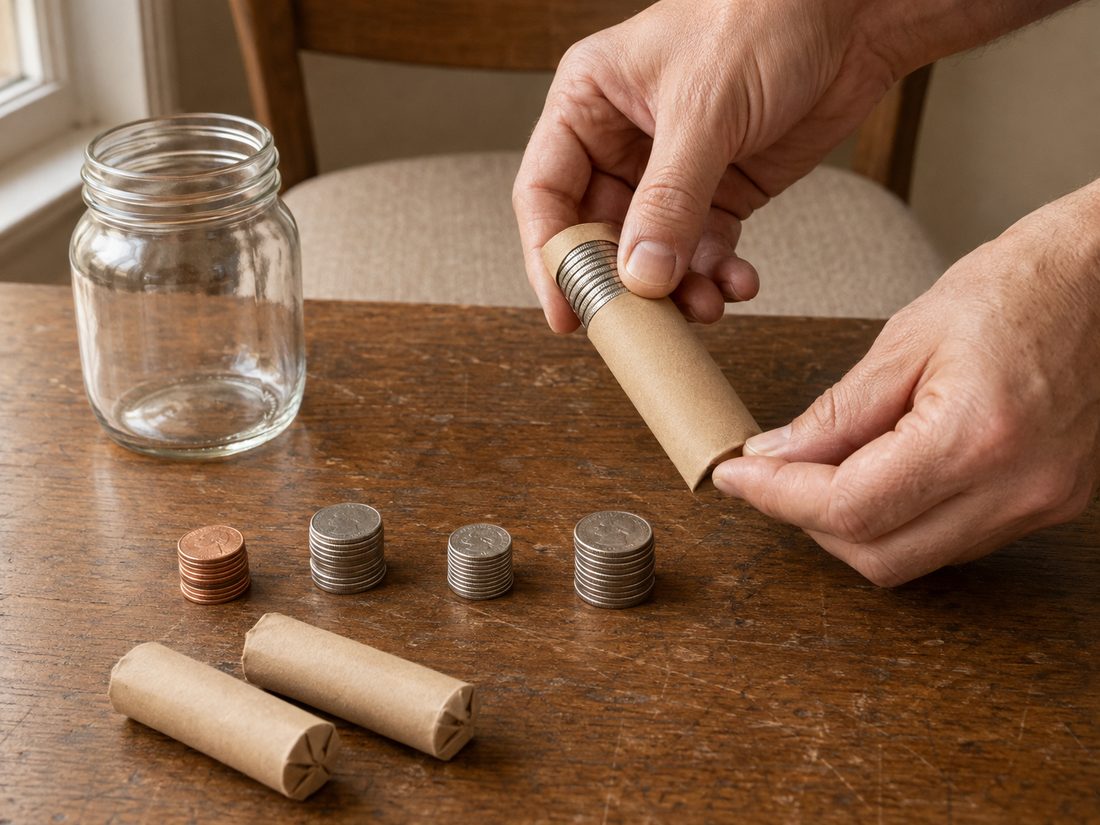
Block one open end of the wrapper with a finger. Stack the counted coins into a sideways cylinder in your palm. Slide them in with one movement so none spill.
Fold both ends shut
Fold or crimp each end of the wrapper inward. Keep going until the end coin is hidden and no coin can drop out. It does not have to look neat, only hold.
- What goes wrong at this end: a fold that is too shallow leaves the end coin showing. That roll will shed coins in a bag or a coat pocket, and you will be counting it again. Secure matters, tidy does not.
Take the rolls to your bank
With the rolls sealed, bring them to your branch. You can swap them for bills or pay them into your account. Most banks will only take change that has already been rolled.
Weigh up a coin machine instead
Rolling by hand is free but slow. A coin-counting machine counts loose change for you. Some credit unions and community banks have one in branch, free for members. Retail kiosks such as Coinstar charge a service fee of up to 12.9% plus a transaction fee for cash. The answer turns on whether your own bank has a free machine, and whether a fee-free gift card suits you instead of cash.
Tips
- If you use a retail kiosk, ask what gift cards it offers before you pour the coins in. The gift card option skips the fee, and the cash option does not.
- Rolling by hand costs nothing but your time. That trade is worth it for a big jar, and rarely worth it for a small one.
- Next time, ask the teller for a stack of spare wrappers while you are at the counter. Then the coins can go straight into rolls as they build up.
Sources
Each step in this guide is drawn from facts stated by several of these pages independently. Sources that did not corroborate anything used here are not listed.
- How To Roll Coins In Wrappers Yourself | U.S. Coins Guide coins.thefuntimesguide.com
- How Many Coins Are In a Roll? moneywise.com
- How to Roll Coins Without Mistakes - coin-identifier.com coin-identifier.com
- Coin Count n' Roll kids.usmint.gov
- How to Exchange Coins for Cash | Lantern by SoFi lanterncredit.com
- How to Roll Coins by Hand | Learn the Proper Way silverrecyclers.com
Leave a comment
Comments are reviewed before appearing. See our Privacy Policy for how your name and message are handled.
Comments
No comments yet.