How to Set Up a Litter Box
Most litter box trouble comes down to the setup rather than the cat. Get the number of boxes, the box itself, the litter and the spot right, and the rest is upkeep. Here is how to arrange all four, and how often to scoop.
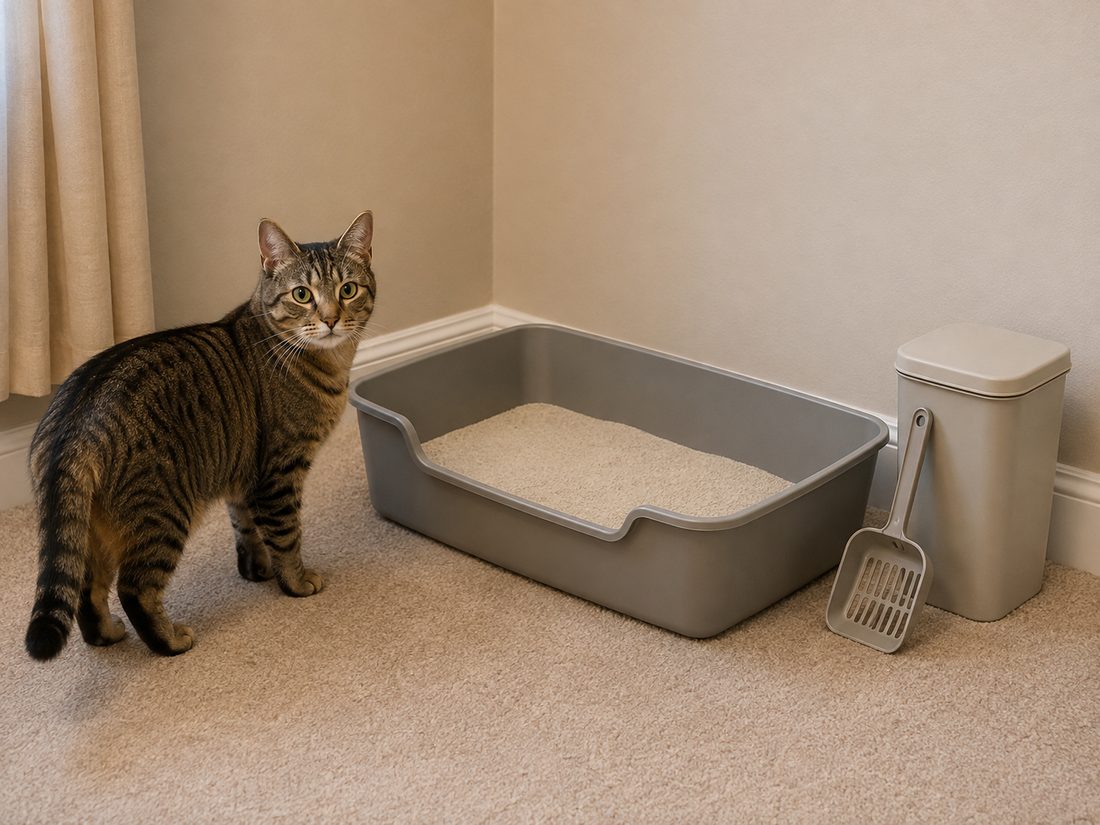
Materials
- Open litter boxes (one per cat plus one spare, or one per floor, whichever is more)
- Unscented fine-grained clumping litter, or non-clumping for kittens
- Scoop
- Litter disposal bin
- Mild soap or detergent
- Disposable gloves
- Tape measure
- Enzyme cleaner
Steps
Work out how many boxes you need
A good starting point is one box per cat, plus one spare. Two cats means three boxes. In a home with more than one level, you also want at least one box on each floor. Count both ways and go with the larger number.
- Two worked examples: three cats in a two-storey house needs four boxes. One cat in a three-storey house needs three, not the two the per-cat rule gives.
Measure your cat
Measure your cat from the nose to the base of the tail. Write the number down, because it decides which box to buy.
Choose an open box
Start with an open box. It should be at least one and a half times your cat's length, and wide enough to turn round in. Bigger is better. At least one side should be low enough that your cat steps in without hopping. One small study comparing covered and open boxes found no strong preference, so treat open as a sensible default rather than a rule.
- Why start open: a hood keeps the smell in the one place your cat has to stand. It also turns the box into a small enclosed space with one way out, which some cats will not use.
Pick a fine-grained litter
Most cats prefer a soft, fine-grained litter that feels like sand. Choose an unscented clumping litter of that kind. Kittens should use a non-clumping litter for their first few months, because they may eat it while digging. Cats have sensitive noses, and a perfumed litter can put them off the box.
Choose a spot for each box
Pick a spot for each box. Choose quiet places with little foot traffic, away from noisy machines like the washer and dryer. Your cat has to reach every box at any hour, so avoid rooms whose door gets shut. Keep the boxes away from your cat's food and water bowls. Spread them around the home, so a cat that finds one spot busy has somewhere else to go.
Buy what you need
Buy the boxes, the litter, a scoop, a bin for the waste and an enzyme cleaner. Take your measurement with you and check each box against it. If nothing in the shop is big enough, a plastic storage box with one side cut down works well. You do not need a liner, and cats often catch their claws in them.
Put the boxes in place
Put each box in the spot you picked for it. Leave a clear way in and out, so your cat is never cornered.
Fill each box two to three inches deep
Add two to three inches of litter to each box. That gives your cat enough depth to dig and bury waste. Top it back up each time you scoop.
Set up somewhere to put the waste
Put a disposal bin or a supply of poop bags beside each box. That saves carrying waste through the house, and saves taking the trash out every day.
- Never flush it: cat waste and litter should not go down the toilet, even litter sold as flushable. It can carry a parasite that survives water treatment.
Show your cat the boxes
Show your cat where each box is, and set it down in one so it knows. If your cat is new to the home, keep it in one room with a box until it is using it reliably.
Scoop it daily
Scoop the box at least once a day. Twice a day, spread across the day, is what you should aim for. Wash your hands afterwards, every time. If you are pregnant, or your immune system is weakened, ask somebody else to do the scooping.
- Wash your hands after scooping, every time: cat faeces can carry a parasite called toxoplasma. If you are pregnant, or your immune system is weakened, ask someone else to scoop. If that is not possible, wear disposable gloves and wash your hands afterwards. Daily scooping helps as well, because the parasite takes one to five days to become infectious.
- Never use these cleaners: ammonia, and pine or phenol cleaners, are toxic to cats. Ammonia can also smell like urine to a cat, which puts some cats off the box. Do not use bleach either. Bleach meeting ammonia gives off a poisonous gas, and cat urine is itself a source of ammonia. Mild soap and warm water does the whole job.
Empty and wash the box
Every so often, dump all the litter out and wash the box with mild soap or detergent. This is for smell and grime, not for germs, because soap will not kill everything that lives in a litter box. With clumping litter, do this about once a month for one cat, and about twice a month for several. Non-clumping litter needs a full change every few days. Dry the box and refill it with fresh litter.
Tips
- If your cat suddenly stops using the box, treat it as an emergency. Straining, frequent trips, or producing little or no urine can mean a blocked bladder. A blocked male cat can die within a day or two. Female cats block less often, but they do block, so any straining cat needs to be seen the same day. In younger cats these signs are most often a painful bladder condition called cystitis rather than an infection. Once a medical cause is ruled out, look at the litter. If you want to try a different litter, put it in an extra box next to the old one and let your cat choose.
- Already own a hooded box? You do not have to throw it out. Most hoods lift off, and the base underneath works as an open box.
- If your cat has already gone outside the box, clean the spot with an enzyme cleaner. Ordinary household cleaners leave a smell your cat can still find, and it will keep going back to the same place. Do not scold your cat or rub its nose in it. That teaches nothing, and a frightened cat avoids the box more, not less.
- Watch how your cat does it. Standing up with the tail high, against a wall or furniture, leaving only a little urine, is spraying. Spraying is marking rather than a toilet problem, and a better litter box will not stop it. Ask your vet what to do about it.
Sources
Each step in this guide is drawn from facts stated by several of these pages independently. Sources that did not corroborate anything used here are not listed.
- The Ultimate Cat Litter Box Setup Guide — Step-by-Step for Beginners ... loveitpets.com
- Get Your Cat to Use the Litter Box bestfriends.org
- How To Set up Your Cat's Litter Box for Success - Cats.com cats.com
- How to Set Up a Litter Box - Modern Cat moderncat.com
- How to Set Up a Litter Box for Success armandhammer.com
- How to Create the Ultimate Litter Box Setup | Zoetis Petcare zoetispetcare.com
Leave a comment
Comments are reviewed before appearing. See our Privacy Policy for how your name and message are handled.
Comments
No comments yet.